

There is a particular kind of veneer result that most people recognize immediately: teeth that are uniformly bright, perfectly flat and a little too large for the face they belong to. It is the look that makes people hesitate before considering cosmetic dentistry, and it is precisely the look Elite Smile NYC works to avoid as a cosmetic dentist in NYC.
Our cosmetic philosophy is simple to state and demanding to carry out. A smile should suit the person wearing it. It should look healthy, balanced and refined, and it should be so convincing that people notice you look well rather than noticing that you have had dental work. Porcelain veneers are one of the most powerful tools we have for achieving that, but only when they are designed with care, crafted with skill and placed with precision.
This guide explains how we approach porcelain veneers at our Midtown Manhattan practice, what the process involves from first consultation to final bonding, and how veneers compare with bonding and whitening so you can decide which path fits your goals. To discuss your smile with our team, call (212) 362-9788.
Our Cosmetic Philosophy: Natural, Harmonious, Precise
Natural Before Dramatic
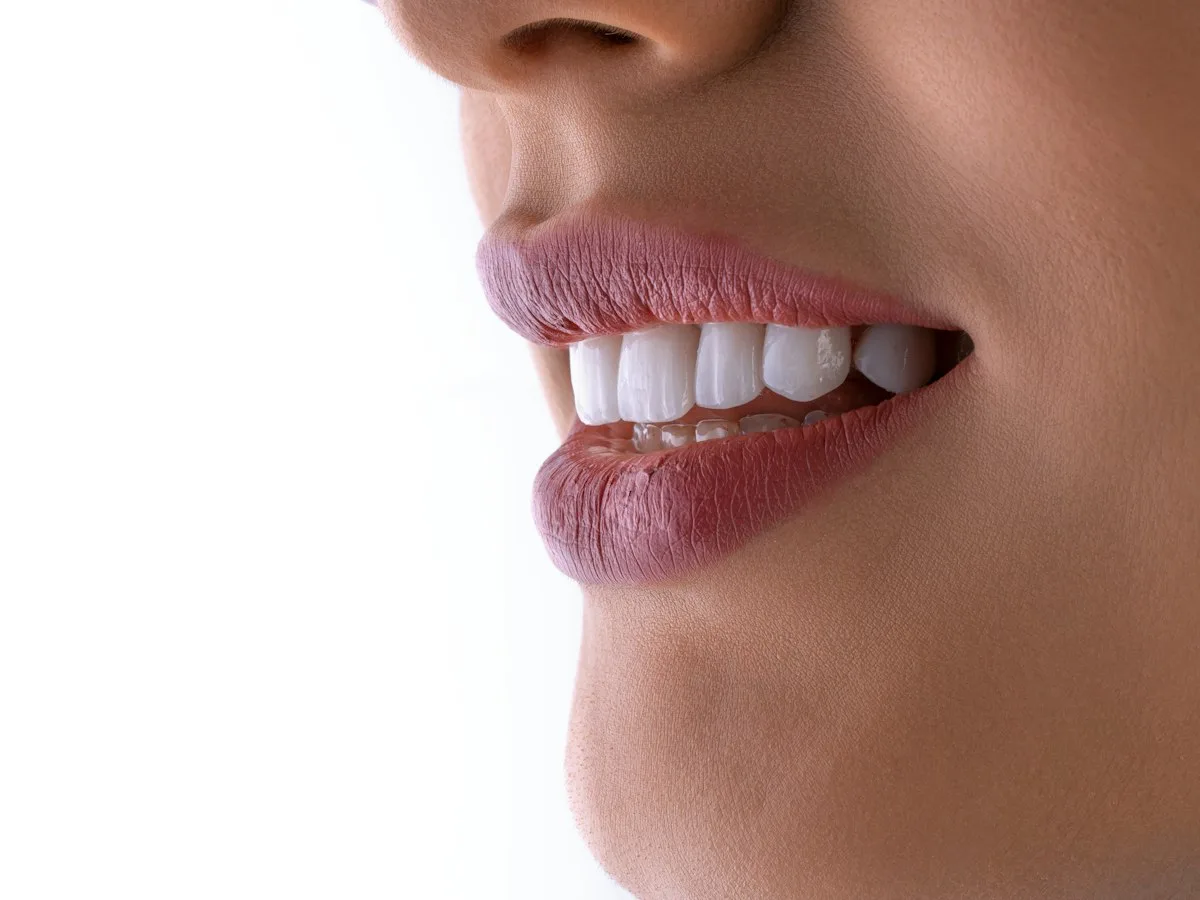
Natural teeth are not a single flat shade of white. They are slightly more translucent at the edges, warmer near the gums, and marked by subtle surface texture that catches light in different ways. When veneers ignore those characteristics, they can look opaque and artificial even if they are technically well made. We design veneers to carry these qualities, so the finished smile looks brighter and more even while still reading as natural teeth.
Facial Harmony Over Formula
There is no universal ideal smile. The right tooth length depends on how much of your teeth show when your lips are at rest and when you smile broadly. The right width relates to the proportions of your face. The edges of the front teeth should follow the curve of your lower lip. Your smile midline should relate to the center of your face. Even the shape of individual teeth, whether softer and more rounded or squarer and more defined, can suit some faces better than others. We evaluate all of these features before deciding what your veneers should look like.
Precision in Every Step
A veneer is only as good as the preparation, records and bonding that support it. Thin porcelain demands careful handling, accurate margins and a properly balanced bite. Precision is what allows a veneer to look beautiful on the day it is placed and to keep performing well for years afterward.
Why Expertise Matters for Porcelain Veneers
Cosmetic work at Elite Smile NYC draws on an unusual mix of restorative and aesthetic expertise. Dr. Ryan Sellinger, a board-qualified prosthodontist trained at the University of Pennsylvania and NYU, brings specialist-level knowledge of tooth proportions, materials and bite. Dr. Jennifer Jablow, a cosmetic dentist whose work has been recognized by the Financial Times and Men’s Vogue, brings a long-standing focus on smile aesthetics. The wider team includes additional prosthodontists and general dentists whose experience supports both the cosmetic and functional sides of treatment. You can learn more about each of them on our team page.
A smile should suit the person wearing it.
That combination matters because veneers sit at the meeting point of art and engineering. A beautiful design that ignores your bite may chip. A strong restoration that ignores your facial features may look out of place. Good veneer work respects both.
The Porcelain Veneer Process at Elite Smile NYC
Most veneer cases are completed over approximately three main visits, though planning appointments and the number of teeth involved can affect your timeline. Here is what each stage looks like.
- 1
The Cosmetic Consultation
Your first visit is a conversation as much as an examination. We want to understand what you like about your smile, what bothers you, and what you hope to see when treatment is complete. Some patients bring photographs of smiles they admire. Others simply know that their teeth look worn, uneven or discolored. Both are useful starting points.
We also evaluate the health of your teeth and gums, existing restorations, your bite and any signs of grinding. If underlying issues need attention first, such as gum inflammation, decay or a bite problem, we address them before cosmetic treatment so your veneers are built on a healthy foundation.
- 2
Digital Scanning and Photographic Records
Accurate records are the foundation of precise veneer design. We capture detailed digital scans of your teeth along with photographs of your smile from several angles, at rest and in motion. These records let us study your tooth proportions, gumline and lip dynamics in detail and give our laboratory a precise representation of your mouth.
- 3
Treatment Planning and Smile Design
Using your records, we develop a design that defines the length, width, shape and arrangement of each veneer. We consider how many teeth should be included, since a narrow smile sometimes looks better when the veneers extend further back, while other patients need only a few teeth treated. We then review the plan with you, explain the reasoning behind it and talk through any adjustments you would like.
- 4
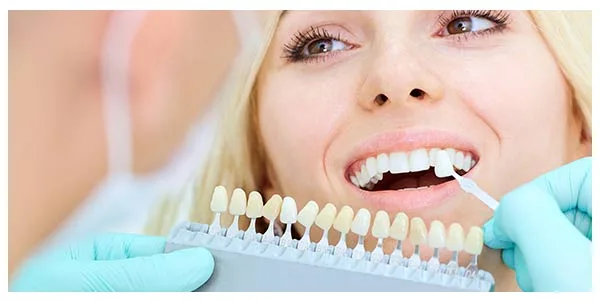
Shade Selection
Choosing a shade is one of the most personal decisions in the process. Brighter is not automatically better. A shade that suits a fair complexion may look stark against a deeper one, and a dramatically white smile can appear unnatural beside the teeth that are not being treated. We evaluate shade in natural lighting, consider your skin tone and the whites of your eyes, and discuss whether whitening your untreated teeth beforehand would help the overall result blend.
- 5
Conservative Preparation and Temporaries
To make room for the porcelain, a thin layer of enamel, typically around half a millimeter, is gently reshaped from the front of each tooth. This step is permanent, which is why careful planning comes first. Temporary veneers are then placed to protect your teeth while the final restorations are made. Temporaries also offer a valuable preview: you can test-drive the shape and length of your new smile in daily life and share feedback before your final veneers are completed.
- 6
Crafting the Veneers in Our In-House Laboratory
Many practices send veneer cases to an outside laboratory and see the results only when they arrive. Elite Smile NYC creates veneers in its own exclusive dental laboratory. This gives our team direct control over each stage of fabrication and allows close communication between the doctor and the technician about every detail of your design. We use Noritake porcelain, a material valued for its natural optical properties, and layer it to recreate the translucency, color depth and surface texture of real enamel.

- 7
Try-In, Bonding and Bite Refinement
Before anything is bonded, we evaluate the veneers in your mouth to confirm the fit, shape and shade. Once you are happy, each veneer is bonded to its tooth using a careful, step-by-step protocol. We then check and refine your bite so the porcelain is protected from excess force. A follow-up visit lets us confirm that your gums are healthy and that everything feels comfortable.
Porcelain Veneers vs. Bonding vs. Whitening
Veneers are not the only way to improve the appearance of your teeth, and they are not always the right one. Here is how they compare with two other popular cosmetic options.
Porcelain Veneers
Veneers can change the color, shape, length and apparent alignment of teeth at the same time, which makes them well suited to patients with several cosmetic concerns. Porcelain is more stain resistant than both natural enamel and composite bonding, and it has a stress tolerance similar to natural teeth. On the other hand, veneers require permanent removal of a small amount of tooth structure, cost more than bonding, and may need to be replaced if one fractures.
Composite Bonding
Dental bonding uses tooth-colored composite resin, sculpted directly onto the teeth, to repair chips, close small gaps or refine a tooth’s shape. It is additive, which means little or no enamel needs to be removed, and it is usually completed in a single visit. Bonding is often an excellent choice for a single chipped tooth or minor reshaping. However, composite is more prone to staining and chipping than porcelain and generally needs touch-ups or replacement sooner.
Professional Whitening
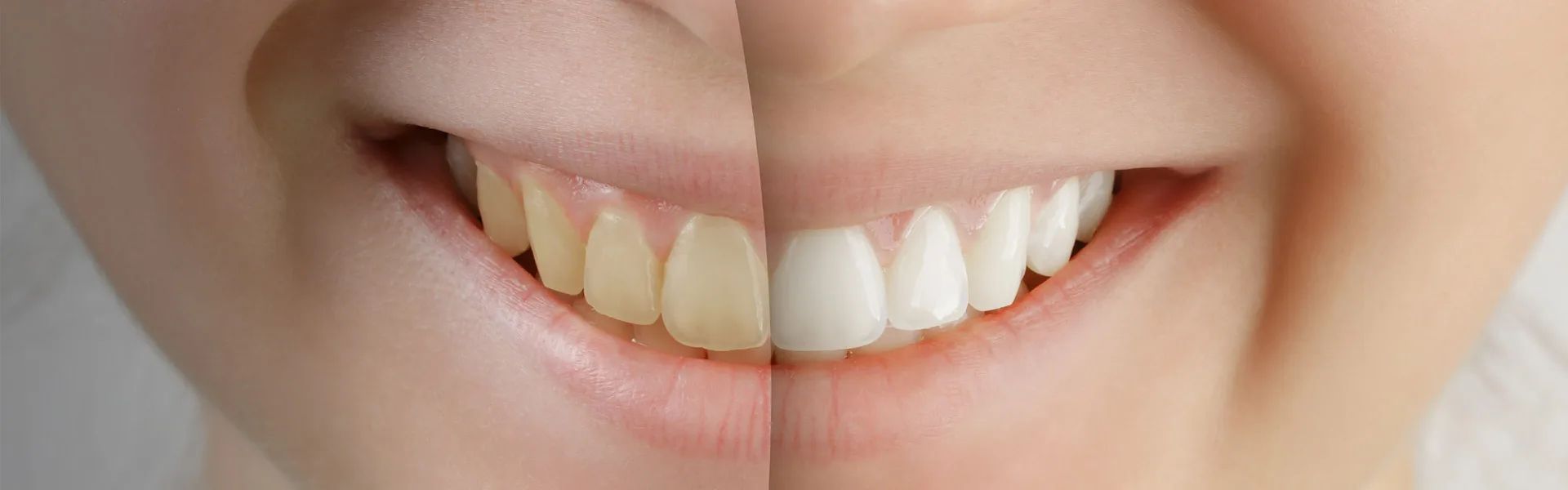
Teeth whitening brightens natural enamel without altering tooth structure. If your main concern is color and your teeth are otherwise well shaped and aligned, whitening may be all you need. It cannot change a tooth’s shape or close gaps, and it does not affect the color of existing crowns, fillings or veneers. Some forms of deep or internal discoloration also respond poorly to whitening.
Choosing Between Them
Patients concerned mainly about color are often well served by whitening. Those with one or two small chips or gaps may find bonding is the most conservative and economical option. Patients who want to address color, shape, proportion and minor irregularities together, and who want a long-lasting, stain-resistant result, are often the best candidates for porcelain veneers. Many treatment plans combine options, for example whitening the lower teeth to complement veneers on the upper front teeth. In other cases, Invisalign may be recommended first to move teeth into a better position so that fewer veneers, or thinner ones, are needed.
Side-by-Side Comparison
| Porcelain Veneers | Composite Bonding | Professional Whitening | |
|---|---|---|---|
| What it changes | Color, shape, length and apparent alignment | Chips, small gaps and tooth shape | Color of natural enamel only |
| Tooth structure removed | A thin layer of enamel (around 0.5 mm), permanently | Little or none | None |
| Durability | More stain resistant than enamel and composite; stress tolerance similar to natural teeth | More prone to staining and chipping; needs touch-ups sooner | Does not change crowns, fillings or veneers; some deep discoloration responds poorly |
| Often best for | Several cosmetic concerns at once and a long-lasting result | One or two small chips or gaps | Patients whose main concern is color |
The Artistry of a Smile Transformation
Patients sometimes ask why two veneer cases with the same number of teeth can look so different. The answer lies in many small decisions.
A central incisor can be lengthened by half a millimeter or by two. The corners of the front teeth can be softly rounded or kept more defined. The edges can be made slightly translucent or fully opaque. Surface texture can be smooth and glassy or subtly varied to mimic natural enamel. The gaps between the teeth near the edges, known as embrasures, can be opened slightly to create a youthful look or kept minimal for a fuller appearance.
None of these choices appears on an insurance form, yet together they decide whether a smile looks refined or artificial. Our in-house laboratory, our prosthodontic training and our insistence on reviewing each design with the patient give us the means to get these details right. You can see the range of results in our smile gallery.
Are Porcelain Veneers Right for You?
Good candidates for veneers generally have healthy gums, enough enamel to bond to, and cosmetic concerns that cannot be fully addressed by whitening or bonding alone. Common reasons patients choose veneers include:
- Discoloration that does not respond well to whitening
- Chipped, worn or uneven front teeth
- Small gaps between teeth
- Teeth that look too short, too narrow or out of proportion
- Mild alignment irregularities in patients who prefer not to wear aligners
- Older veneers or bonding that have become stained, chipped or dated
Veneers may not be the best option for patients with untreated gum disease, significant decay, very heavy grinding or severe crowding. In those cases, we may recommend addressing the underlying issue first or considering a different solution.
Discuss Porcelain Veneers With Our Cosmetic Team
Book a smile design consultation at our Midtown Manhattan practice.
Caring for Your Porcelain Veneers
Veneers do not require complicated maintenance, but they do benefit from good habits. Brush twice daily with a non-abrasive toothpaste, clean between your teeth every day, and keep up with professional cleanings so our hygienists can care for both your natural teeth and your restorations. If you clench or grind, wearing a night guard can significantly reduce the risk of chipping. Avoid using your teeth as tools, and take care with very hard foods such as ice or hard candy.
Frequently Asked Questions About Porcelain Veneers
Will my veneers look fake?
Not if they are designed and crafted well. Our approach focuses on natural shade gradients, translucency, surface texture and proportions that suit your face. We review the design with you before your final veneers are made, and temporaries give you a preview of the shape.
How many veneers will I need?
It depends on your smile width and goals. Some patients need only two to four veneers, while others benefit from treating six to ten upper teeth so the smile looks balanced from every angle. We will recommend a number based on your records and discuss the reasons.
Is getting veneers painful?
Most patients find the process comfortable. Local anesthetic is typically used during preparation, and many patients report only mild, temporary sensitivity afterward.
How long do porcelain veneers last?
With good care, porcelain veneers can last for many years. Longevity depends on your bite, grinding habits, oral hygiene and how well the veneers are maintained.
Can I whiten my teeth after getting veneers?
Whitening does not change the color of porcelain. If you want your untreated teeth to be brighter, it is best to whiten before your veneer shade is chosen, so everything matches.
Should I choose bonding or veneers?
Bonding is often ideal for small, isolated repairs and is more conservative and less costly. Veneers are better suited to larger transformations and offer greater stain resistance and durability. We can show you how each option would work for your specific smile.
Do veneers require removing tooth structure?
Yes. Typically around half a millimeter of enamel is reshaped from the front of each tooth to make room for the porcelain. Because this is permanent, we plan each case carefully and discuss alternatives before beginning.
How long does the veneer process take?
Most cases are completed over about three main visits, from consultation to final bonding. Planning appointments, preliminary treatment or larger cases may extend that timeline.
Begin Your Smile Design Consultation
A great veneer result starts long before porcelain is made. It starts with an honest conversation about what you want, a careful study of your smile and face, and a team that has the skill and tools to translate that plan into something beautiful. Learn more on our porcelain veneers page, read what patients say in our reviews, or meet the doctors behind our cosmetic work.
Elite Smile NYC is located at 1776 Broadway, 18th Floor, Manhattan. Call (212) 362-9788 or request a consultation online to begin planning your new smile.
Related Reading
Begin Planning Your New Smile
Elite Smile NYC · 1776 Broadway, 18th Floor · Manhattan