

Most conversations about dental implants focus on the titanium post that sits beneath the gums. That post matters, but no one ever sees it. What people notice is the tooth on top: its shape and color, how it meets the gumline, and whether it feels like a natural part of your bite every time you chew. That visible, functional portion is the implant restoration, and it is where Elite Smile NYC concentrates its expertise.
Our practice in Midtown Manhattan is built around restorative and cosmetic dentistry. When it comes to implants, our role is clear. We plan the final result, coordinate with experienced surgical specialists who place the implant, and then design and deliver the crown, bridge or denture that turns that implant into a working, natural-looking tooth. Patients come to us because they want the finished tooth to be done properly, not because they are looking for the quickest surgery.
If you are missing a tooth, have an implant waiting to be restored, or have an older implant crown that never quite looked right, call (212) 362-9788 to arrange a restorative consultation.
Two Disciplines, One Outcome
Implant treatment involves two distinct phases, and understanding them helps explain how we work.
The surgical phase places the implant into the jawbone and allows it to integrate with the surrounding bone. This step is typically performed by an oral surgeon or periodontist, specialists whose training focuses on bone, soft tissue and surgical technique.
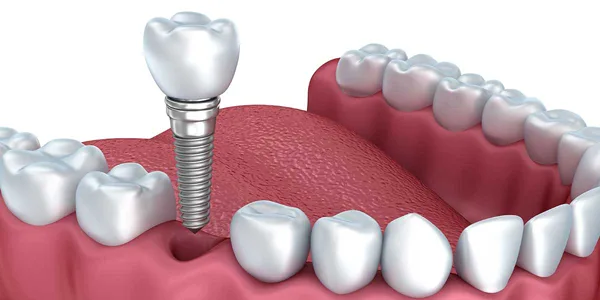
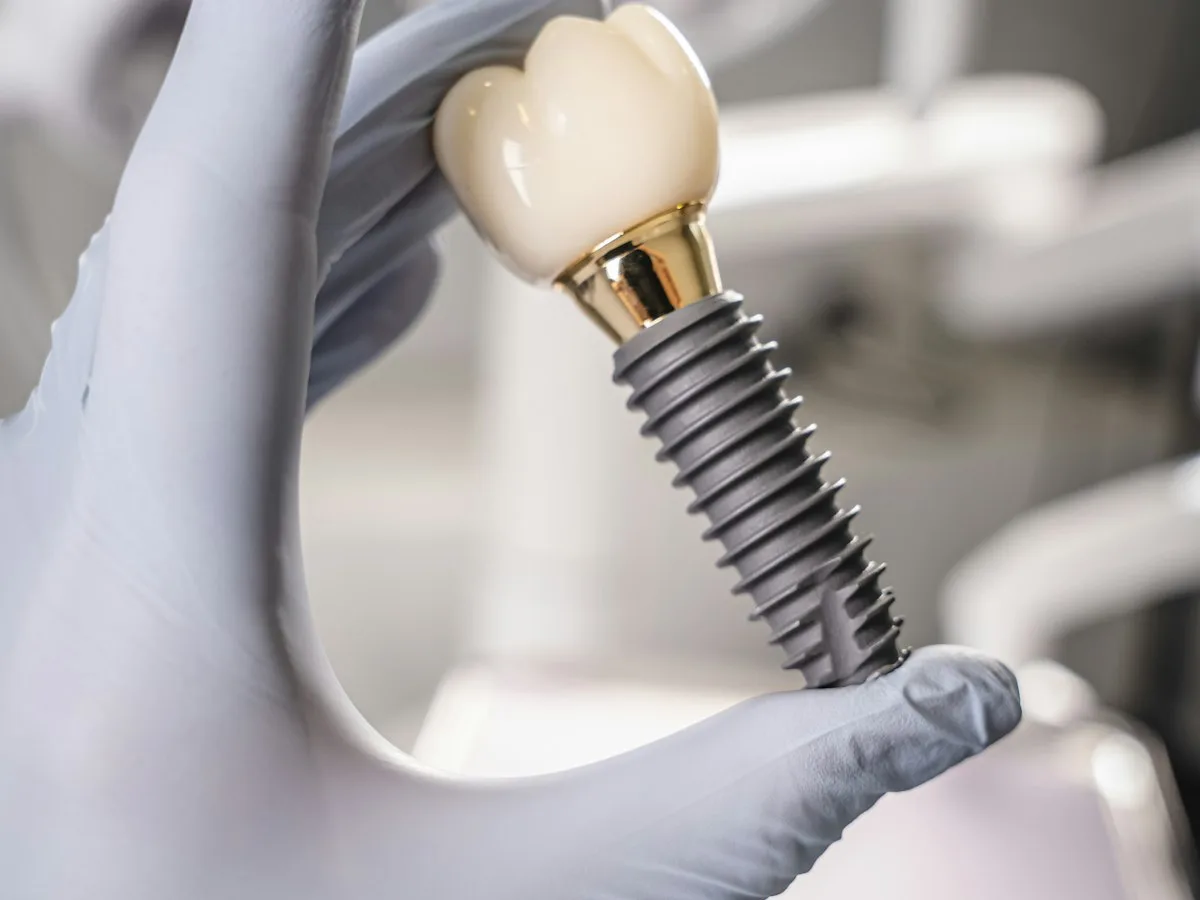
The restorative phase begins once the implant has healed. An abutment, the connector between implant and tooth, is selected or custom-made, and a crown, bridge or denture is fabricated to attach to it. This phase determines how the tooth looks, how it fits against its neighbors, how it handles biting forces and how easy it is to keep clean.
Both phases need to be done well. But the restorative phase is the one patients live with every day, and it is the one that most often separates a forgettable result from an exceptional one. At Elite Smile NYC, we consider it our specialty, and we refer the surgical portion to colleagues whose daily focus is implant surgery.
The Two Phases of Implant Treatment
| Phase | Who Performs It | What It Involves |
|---|---|---|
| Surgical phase | An oral surgeon or periodontist | Places the implant into the jawbone and allows it to integrate with the surrounding bone |
| Restorative phase | The Elite Smile NYC prosthodontic team | Abutment selected or custom-made; crown, bridge or denture designed and fitted. Determines how the tooth looks, fits, handles biting forces and cleans |
Why a Prosthodontist-Led Team Makes a Difference
Prosthodontics is the dental specialty devoted to restoring and replacing teeth. Prosthodontists complete additional years of post-doctoral training focused on crowns, bridges, dentures, implant restorations and complex bite reconstruction. Elite Smile NYC is unusual among Manhattan practices in having three prosthodontists on its team.

Dr. Ryan Sellinger
Dr. Ryan Sellinger is a board-qualified prosthodontist who earned his dental degree at the University of Pennsylvania School of Dental Medicine and completed his prosthodontic training at NYU College of Dentistry. He has served as chief contributor of clinical cases to the textbook Clinical Cases in Prosthodontics.

Dr. Liza Horbar
Dr. Liza Horbar holds a DDS and a Master of Science in Prosthodontics from Columbia University College of Dental Medicine. Her work includes implant research supported by an American College of Prosthodontists New York Section Research Grant.

Dr. Robert Krackow
Dr. Robert Krackow, a board-certified prosthodontist trained at Columbia and the Manhattan Veterans Administration Hospital, brings close to four decades of private practice experience in Manhattan.
For patients, this depth of training means the person designing your implant restoration understands occlusion (how your teeth come together), material selection, tissue contours and the long-term mechanics of an implant-supported tooth. These details rarely make it into an advertisement, but they largely decide whether a restoration still looks and feels right years later.
Restoratively Driven Planning: Starting With the Final Tooth
One principle guides our implant work: the position of the implant should be dictated by the tooth it will support, not the other way around.
When an implant is placed without a clear picture of the final restoration, the restoring dentist may later have to compromise. The crown might need an awkward angle, a bulky contour or a visible collar of metal to make up for a less-than-ideal implant position. Those compromises can affect appearance, cleaning and bite.

We prefer to plan in reverse. Before any surgery, we evaluate your bite, the space available, the health of neighboring teeth and the shape of your gums. Diagnostic imaging, including three-dimensional CT scans when appropriate, helps show the bone volume and anatomy the surgeon will be working with. From there, we define where the future tooth should sit and communicate that plan to the specialist who will place the implant.
This is the kind of coordination that produces implant teeth that blend in rather than stand out.
The position of the implant should be dictated by the tooth it will support, not the other way around.
How We Coordinate With Your Surgical Specialist
Working with an outside surgeon does not mean you are left to manage the process on your own. Our team acts as your home base from your first visit to your final restoration.
A typical path looks something like this:
- Restorative consultationWe review your dental history, examine the area, discuss your goals and explain whether an implant restoration is likely to be the right option or whether a bridge, partial denture or other approach deserves consideration.
- Records and planningRadiographs, photographs and, when indicated, CT imaging help us map out the final restoration and identify any preliminary needs, such as treating gum disease or addressing a failing neighboring tooth.
- Referral with a planWe refer you to a trusted oral surgeon or periodontist and share our restorative plan so the implant can be positioned with the final tooth in mind. If you already have a surgeon you trust, we are glad to collaborate with them.
- Healing and temporariesWhile the implant integrates, we look after the appearance and function of your smile, including temporary solutions when a front tooth is involved.
- Final restorationOnce the surgeon confirms healing, we take precise records, select or design the abutment and fabricate your crown, bridge or denture. We then refine the fit, contacts and bite.
- Long-term maintenanceOur hygienists and doctors monitor the implant, the surrounding gum tissue and the restoration at your regular visits.
Patients often tell us that having one practice oversee the big picture makes the process feel far more manageable, especially when several teeth or multiple specialists are involved.
Have an Implant Waiting to Be Restored?
Our team plans the final tooth first and coordinates every step with your surgeon.
Implant Restoration Options
The right restoration depends on how many teeth are missing, where they are and what your bite requires. Our restorative dentistry services cover the full range of implant-supported options.
Single Implant Crowns
When one tooth is missing, an implant crown replaces it without touching the adjacent teeth. For a front tooth, the challenge is aesthetic: matching translucency, surface texture and gum contour to the natural tooth beside it. For a back tooth, the emphasis shifts toward strength and a stable bite. We choose materials, often porcelain or high-strength ceramics over a zirconia substructure, based on where the tooth sits and the forces it will face.
Implant-Supported Bridges
When several neighboring teeth are missing, it is not always necessary to place one implant per tooth. A bridge supported by two or more implants can replace a series of teeth while keeping surgery more conservative. Planning the number and position of implants for a bridge requires close coordination between our team and the surgeon, because spacing and angulation determine how well the bridge looks and functions.
Implant-Retained and Implant-Supported Dentures
For patients who are missing most or all of their teeth in an arch, implants can stabilize a denture so it no longer shifts while eating or speaking. Some designs snap onto implants and remain removable for cleaning. Others are fixed in place. Our prosthodontists can explain the trade-offs in comfort, maintenance, appearance and cost.
Combining Implant Restorations with Other Treatment
Implant restorations are often one part of a larger plan. A patient might need an implant crown on one side, a new crown on a cracked tooth on the other, and porcelain veneers or whitening to bring the front of the smile into harmony. Because cosmetic and restorative care happen under one roof here, we can sequence treatment so every element matches in shade, shape and proportion.
Implant Restoration Options at a Glance
| Restoration | Typically Used When | Key Considerations |
|---|---|---|
| Single implant crown | One tooth is missing | Replaces the tooth without touching adjacent teeth. Front teeth demand close aesthetic matching; back teeth need strength and a stable bite |
| Implant-supported bridge | Several neighboring teeth are missing | Two or more implants can replace a series of teeth, keeping surgery more conservative. Spacing and angulation need close coordination with the surgeon |
| Implant-retained or implant-supported denture | Most or all teeth in an arch are missing | Stabilizes the denture so it no longer shifts. Designs can snap on and remain removable, or be fixed in place |
| Combined treatment | Implants are one part of a larger plan | Sequenced with crowns, porcelain veneers or whitening so every element matches in shade, shape and proportion |
What Makes an Implant Restoration Look Natural?
A natural-looking implant tooth depends on details many patients never think to ask about.
Emergence profile
Emergence profile describes the way a restoration rises out of the gums. When it is shaped correctly, the gum tissue sits around the crown much as it would around a natural tooth. When it is not, you may see a dark line, a gap or a tooth that appears too long.
Abutment design
Abutment design influences that profile. In many cases, a custom abutment shaped for your specific gum contours gives a better result than a standard off-the-shelf part, particularly in the front of the mouth.
Shade and character
Shade and character go beyond picking a color from a chart. Natural teeth have translucent edges, subtle color gradients and surface texture. A restoration that ignores those features can look flat even if the shade is technically correct.
Bite and contacts
Bite and contacts determine comfort and durability. An implant does not move within the bone the way a natural tooth does, so the bite on an implant crown needs to be carefully adjusted to avoid excess stress.
Prosthodontic training emphasizes exactly these considerations, which is why patients who care about the finished result often seek out a prosthodontist-led practice.
Already Have an Implant? We Can Help With That Too
Not everyone arrives at the beginning of the process. Some patients had an implant placed elsewhere and now need it restored. Others have an implant crown that has loosened, chipped, darkened at the gumline or simply never looked right. Still others have older implant restorations that need evaluation after many years of service.
We regularly see patients in each of these situations. To plan treatment, we will want to identify the implant system involved and review any available records from the original surgeon or dentist. In many cases, an existing implant can be given a new, better-designed restoration without additional surgery. When there are concerns about the implant itself or the surrounding tissue, we will explain those clearly and coordinate with an appropriate specialist.
Is an Implant Restoration Right for You?
Implants are not the answer for every missing tooth. Factors such as gum health, bone volume, bite, medical history and personal preference all play a part. In some situations, a traditional bridge or a well-designed partial denture is the better choice, and we will tell you when we believe that is the case.
Patients who tend to benefit most from our approach include:
- Those replacing a highly visible front tooth
- People restoring several missing teeth as part of a broader rehabilitation
- Patients with complex bites or heavy wear
- Anyone who wants the restorative and cosmetic sides of their care managed by a single, experienced team
Caring for Your Implant Restoration
An implant cannot develop a cavity, but the gums and bone around it still need attention. Plaque buildup can lead to inflammation around the implant, a condition that can threaten its long-term stability if ignored.
Daily brushing and cleaning around the restoration remain essential. We will show you the best tools for your specific restoration, which may include floss, interdental brushes or a water flosser. Regular professional visits allow our hygienists to clean around the implant with appropriate instruments and let our doctors check the restoration, the bite and the surrounding tissue. If you grind or clench your teeth, a night guard may be recommended to protect both your natural teeth and your implant work.
Frequently Asked Questions About Implant Restorations
Does Elite Smile NYC place dental implants?
Our focus is on planning and restoring dental implants. In most cases, the surgical placement is performed by an oral surgeon or periodontist we work closely with. We coordinate the process, share the restorative plan with your surgeon and design and deliver the final tooth.
What is the difference between an implant and an implant restoration?
The implant is the post placed in the jawbone to replace the tooth root. The restoration is everything attached to it, typically an abutment plus a crown, bridge or denture. The restoration is the part you see, smile with and chew on.
Can you restore an implant that was placed at another office?
In many cases, yes. We will need to identify the implant system and review your records. Once we understand what was placed, we can usually design a restoration that fits it properly.
Why should a prosthodontist restore my implant?
Prosthodontists complete specialized training in replacing teeth, including implant restorations, bite reconstruction and material selection. That training is especially valuable for front teeth, multiple-tooth cases and patients with complex bites.
How long does it take to receive my implant crown?
Timing depends on how quickly the implant integrates with the bone and whether grafting or other preparatory care was needed. Once the surgeon confirms the implant is ready, the restorative phase usually involves a few appointments for records, try-in and delivery. We will give you a personalized timeline at your consultation.
Will my implant crown match my natural teeth?
That is the goal of every restoration we design. Shade, translucency, shape and gum contour are all planned to blend with your neighboring teeth. If you are considering whitening, we recommend doing it before your final restoration is made, since porcelain does not change color.
How long do implant restorations last?
With good home care and regular professional maintenance, implant restorations can serve patients well for many years. Longevity depends on factors such as bite forces, grinding habits, gum health and the materials used.
What does an implant restoration cost?
Fees depend on the type of restoration, the number of teeth involved, the abutment design and any additional treatment needed. Surgical fees are billed separately by the specialist who places the implant. We provide a written treatment plan with our restorative fees before any work begins.
Plan Your Implant Restoration with Elite Smile NYC
Whether you are starting to consider an implant, have one ready to be restored, or want a second opinion on an existing restoration, the most useful first step is a conversation with a restorative team that sees the whole picture. Visit our implant services page to learn more, browse examples of our work, or meet our doctors.
Elite Smile NYC is located at 1776 Broadway, 18th Floor, in Midtown Manhattan. Call (212) 362-9788 or request an appointment online to schedule your implant restoration consultation.
Related Reading

Schedule Your Implant Restoration Consultation
Elite Smile NYC · 1776 Broadway, 18th Floor · Midtown Manhattan